
Pre-Qualification vs. Pre-Approval…

The Real Story…

News and commentary about the real estate market and related topics. Dave Parrish, ABR ®, CRSA, CSP, GRI, ePRO ®, REALTOR ®, RealtySouth

Before you start looking at homes, you need to have some idea of what you can afford. You can get an idea of what priced home you can actually afford by doing some simple calculations on your own. However, since there are many different factors involved, including your own financial situation and variations in the qualification guidelines for different mortgages, the easiest and most accurate way to determine how large a mortgage you can qualify for is to talk to a lender.

Pre-approval is an important first-step before you even begin looking for a home… it lets you know just how much home you can really afford.

Getting pre-approved requires that the lender verify your financial information, and it serves as a commitment (although not a guarantee) to lend a specified amount based on that information. This gives you significant buying power with a seller who recognizes you will be approved for a loan and lets you know just what you can realistically afford to buy.

What is Pre-qualification?

Pre-qualification is an informal discussion between borrower and lender. The lender estimates the amount that you can borrow based solely on what you tell them about your income and assets. The lender does no verification and is not bound to make the loan when you’re ready to buy. Pre-qualification is not viewed by sellers as adequate confirmation that you are a qualified purchaser and is not viewed as acceptable. This is especially true in purchasing any bank-owned property.

How is Pre-approval Better?

To a seller, a lender’s pre-approval letter is considerably stronger than a pre-qualification letter. Loan pre-approval is based on documented and verified information regarding your employment, your income, your liabilities, your assets and the cash you have available to close on a home purchase. If a seller knows your financing is secure, your offer is stronger. Pre-approval also gives you peace of mind as you shop for a home, knowing that you will qualify for the proper mortgage amount.

Being pre-approved puts you in the position of being able to act quickly when you find that great home that other buyers are looking at as well!

Getting Pre-Approved

When you apply for a loan, your lender will look at several things:

• Down payment amount

• How long you have been employed in your current position

• Whether you have the funds on deposit for your down payment and closing costs

• Your income-to-debt ratio and your credit report

Lenders nowadays place much emphasis on the credit report. Credit bureaus compile a record of debts from credit card companies, banks, department stores, and other firms. This information appears on your credit report, so it shows whether you pay your bills on time. Lenders develop credit ratings based on how well you manage this function. The higher your credit score, the more flexible lenders will be in loan approval and specific requirements.

When you meet with lenders, ask how they decide if you are a good credit risk. It is likely to be from a credit report. Lenders can order the credit report for you and discuss your score. If your credit is less than sterling, they can usually offer suggestions on how to strengthen your credit position.

A WORD OF CAUTION: Having too many lenders look at you credit drive your credit score down as one of the components of the credit score deals with the number of credit score inquires. Every inquiry is a hit and drives your score down, so … SHOPPING LENDERS CAN ACTUALLY HURT YOU.

RECOMMENDATION: You can speak with several lenders without driving your credit score down by following these guidelines:

  1. If you haven’t given them your social security number or driver’s license, they can’t get your credit report / make a hit on your credit score.
  1. While you can’t get pre-approved without providing this information, it does allow you to at least interview the possible lender agents to decide perhaps who you would rather work.
  1. Note that there is actually little variation on what your real interest rate is from legitimate lenders. What varies is the terms and fees. Items such as Origination Fees and Discount Points are fees that are charged that in effect buy down the interest rate. Normally, you are better off NOT buying down the rate, as it takes several years to actually realize any savings. But everyone’s situation is different.
  1. Ask for an estimate of closing costs associated with the loan. Ask for an explanation of the fees/charges. Some lenders use this as a way to extract additional monies and drive up the profitably of a loan, with what are known as “Junk Fees.”
  1. If a lender ever mentions they can get a property to appraise for more than the asking price, BEWARE … this is a technique often used by PREDATORY LENDERS and possible mortgage fraud.

If all this seems a little overwhelming, don’t hesitate to contact your REALTOR® to help you navigate through this and other issues surrounding your home buying decisions.

Posted in The Real Story | Tagged , , , | Leave a comment

Inspect before you buy…

The Real Story …

News and commentary about the real estate market and related topics.
Dave Parrish, ABR ®, CRSA, CSP, GRI, ePRO ®, REALTOR ®, RealtySouth


An ounce of prevention … worth a pound of cure.

It makes sense doesn’t it that you would inspect a property before you buy. Yet, when it come right down to it many buyers don’t really understand how very important this step is and how it is used in the purchase process, what it includes and doesn’t include, who should do it, etc. So, here’s the Who, What, Why, Where and When of Home Inspections.

First of all a reminder: Caveat Emptor (Buyer Beware). Hope you read my article several weeks back about Caveat Emptor … But just in case you missed it, here is a quick summary: Alabama is a modified Caveat Emptor State. This means that except for health and safety issues it is the responsibility and duty of the buyer of real property to determine the fitness and suitability of a property before they purchase it … No ands, ifs or buts!

What: A home inspection is an opportunity to make a through physical examination of a property to exercise many of its components and systems to determine the overall condition of the property both inside and outside. I rarely write an offer to purchase for my clients without requiring a home inspection and making the contract’s execution contingent on an acceptable result or acceptable remediation of issues of importance to the buyer.

No home is perfect. Every home will have issues on a home inspection.

Home inspection reports do not describe the condition of every component if it’s in excellent shape; but, they should note every item that is defective or needing service. The serious problems include:

· Health and safety issues

· Roofs with a short life expectancy

· Furnace / A/C malfunctions

· Foundation deficiencies

· Moisture / drainage issues


Realize however that there are also things that the Home Inspection will not cover, such as:

· Asbestos

· Lead

· Radon, Methane, Radiation and Formaldehyde

· Mold, Mildew and Fungi

· Wood-Destroying Organisms

· Rodents

· Sewer or septic system inspection

You might want to have additional specific inspections performed as well. But remember time is of the essence and you will have to pay for each of those inspections even if you elect not to buy the property!

When: Generally, the buyer has a defined time frame or window in which to make a home inspection and submit a requests for remediation (problem/issue resolution). This window is usually in the range of 5-10 days with specific defined periods following the inspection for both the Buyer and Seller to negotiate remediation of items of concern to the Buyer. Failure to comply with these time periods in effect nullifies the benefits guaranteed by the home inspection contingency. Therefore, once an offer is accepted … the home inspection usually becomes the very first order of business.

Who: Home inspections aren’t free and Sellers will rarely allow their inclusion in the costs that they agree to pay at closing. Consequently, buyers are frequently tempted to perform them personally or to have a friend or relative perform them. This is almost always a mistake. The inspection is best performed by a licensed home inspection professional, an independent third party working for the buyer’s interests that thoroughly understands the process and whose job it is to act in a timely professional manner.

The Buyer’s Agent will normally provide the buyer with a list of qualified Home Inspectors from which to choose; but, they should not and will not recommend a single specific inspector. Likewise, except for providing entry to the property, agents are rarely present for the home inspection to insure that the inspection is not influenced by them. Remember this is to be a fair and independent inspection.

However, the Buyer should be present at least for the last part of the inspection to review with the inspector particular issues of concern revealed by the inspection. Being present for the entire inspection is generally not a good idea, as it could well interfere with the normal methodological process that the inspector follows and therefore contribute to something being overlooked. But each home inspector is different and will advise you as to how their process works.

Where: This is the easy one … At the home to be inspected!

How: The inspector will have a defined process that they follow for the inspection and will generally take photographs of problem areas. It is common for the inspector to request the buyer to meet with them on site toward the end of the time they have set aside for the inspection to review their findings and perhaps to physically show the buyer items of concern. A detailed written report is usually provided to the purchaser within 24 hours. From which the buyer makes a decision about repair requests to be presented to the Seller.

So Then What? It has been said many times … No home is perfect. At the same time Sellers don’t want to make repairs. However, only you can decide what is important to you in making your final decision to proceed. So you will have to make some choices about what you request be addressed. Understand that Seller is not required to make any of these corrections; nor, if you act within the time frames specified by your sales contract, are you obligated to buy a house that doesn’t meet your needs based on the results of the home inspection. So what items are addressed and how they are addressed are often negotiated.

Remember it is the Buyer’s responsibility and duty to determine that the home is fit for their needs. Be safeGet a Home Inspection!

Posted in The Real Story | Tagged , , | Leave a comment

Smorgasbord…

The Real Story …

News and commentary about the real estate market and related topics.

Dave Parrish, ABR ®, CRSA, CSP, GRI, ePRO ®, REALTOR ®, RealtySouth

Last week, we spoke fairly extensively about the issues surrounding Foreclosures and Short Sales. This week, we look at some related information on several fronts and finally, we will take a look at the effect of rising interest rates. But first…

Setting the Record Straight… The opening statement of last week’s article/column (a quote from Mortgage Bankers Association®): 1 out of 10 homes are either delinquent or in foreclosure.

While this is a true statement, it is important to emphasize that this is a national number and not reflective of the local market. Alabama, as a whole, fairs much better than the nation as a whole with it’s ranking as number 30 in terms of the number of foreclosures. Alabama’s foreclosure activity between January and June indicated 9,657 properties receiving filings, or one in every 84 homes, according to RealtyTrac.

This number of course does not include the homes whose owners are delinquent. On a negative side Alabama’s number 30 ranking is a worse ranking than its 2008 ranking of number 34. In this category it’s better of course to be down the list than on top of the list!

I haven’t been able to determine Alabama’s delinquency numbers/rating as of yet but will report those and even more localized information as I am able to determine them. Even so, it is safe to say that delinquencies are on the rise and the number of people looking for foreclosure help is increasing correspondingly. That brings me to my next topic…

Foreclosure Rescue Scams

With the economy in recession and the national unemployment rate reaching 9.5% in June, so-called “foreclosure rescue companies” have been emerging to prey on people who are having trouble paying their mortgages, promising to help stop a foreclosure on their home.

In response to this growing problem, the Federal Trade Commission (FTC), the nation’s consumer protection agency, has produced resources in English and Spanish to help home owners learn to recognize scammers and to let them know where they can obtain free help. Home owners can go to the FTC’s “Money Matters” Web site www.ftc.gov/YourHome (en español: www.ftc.gov/SuCasa) to:

  • Learn about foreclosure scams, debt, credit cards and other financial management advice
  • View the new FTC foreclosure video “Real People, Real Stories”
  • Download the FTC’s flyer about foreclosure rescue scams, “A Note to Homeowners,” in English or Spanish


Free copies of the flyer, and any of the FTC’s consumer education materials, can be ordered at www.ftc.gov/bulkorder.

Home owners can find out where to get free foreclosure help at www.hopenow.com or by calling 888-995-HOPE (4673). The Homeowner’s HOPE™ Hotline – open 24/7 – is operated by the Homeownership Preservation Foundation, a nonprofit member of the HOPE NOW Alliance of mortgage industry members and HUD-certified counseling agencies.

Another resource offering free information on the President’s plan to help homeowners, is available at:

www.makinghomeaffordable.gov

The Effect of Rising Interest Rates

We have previously reported the bottoming out of the interest rate decline (which had been the bright light in our current financial environment) … with the predictions by the experts that 4.5% rates (without by down) were now history and that rates by year-end would be at or above 6% with rates forecast to be in the 8% range by the end of 2010.

So what is the impact of these increasing rates? Obviously, larger mortgage payments will be the result; however, that is often difficult for us to put in perspective. Realizing that most of today’s buyers are cash strapped and are financing as much of the home’s purchase prices as possible (generally 96.5%), the impact of rising mortgage rates becomes more obvious with the following observation: Every 1% that interest rates rise is equivalent to a 20% increase in the price of a home!

So how does it impact me … If you’re a seller, you will have fewer prospects for your home, if you’re a buyer, you will get less home for your dollar (if the amount of home you’re buying is based on what you can afford as a monthly mortgage payment)!

Housing is more affordable today than it has been in many years and is more affordable than it’s going to be … Don’t miss this market!

Posted in The Real Story | Tagged , , , | Leave a comment

Avoiding Foreclosure…

The Real Story…

News and commentary about the real estate market and related topics.

Dave Parrish, ABR®, CRSA, CSP, GRI, ePRO®, Realtor®


Avoiding Foreclosure…

Nationwide, 1 out of 10 homes are either delinquent or in foreclosure…

The current U.S. housing market and financial crisis have caused tremendous stress and heartache for families across America. During times like these, there are always a certain percentage of homes or homeowners who are distressed.

According to the Mortgage Bankers Association®, as many as 1 out of 10 homes are either delinquent or in foreclosure, and unfortunately, 7 out of 10 homeowners in foreclosure proceed without the assistance or advice of real estate professionals or mortgage representatives. If your home is at risk of foreclosure, you don’t have to panic. There are many ways to ease the difficult situation, and one may be right for you.

The country has seen a recent spike in foreclosures and defaults. As a result, in addition to new legislature, lenders have been more willing to work with distressed borrowers to help keep them in their homes.

If you or someone you know is in this unfortunate situation or may be soon, now is the time to act. I hope you’ll find that the following information will not only explain the ins and outs of foreclosure; but, how you can avoid it and what your various options are.

You don’t have to be the next victim of foreclosure. There is help available—if you know where to look.

Be sure to talk to a professional to find the best option for your specific situation.

The Basic Foreclosure Process…

1. Default—homeowners must miss a payment or default on payment for the property to enter the foreclosure process.

2. Legal Notice—the lender of the foreclosing property must notify homeowners that they are entering into the foreclosure process.

3. Bank Sale or Auction Date—homeowners are informed that they have a bank sale or auction date at which point the foreclosing mortgage company will gain control of the property.

4. Redemption Period—the period of time in which homeowners may present payment to the bank and regain possession of their property. (Not all states have a redemption period.) The normal redemption period for Alabama is 1 year. However, there are exceptions to this rule which can extend or cause forfeiture of the redemption period

For more information, contact your real estate agent or mortgage representative.

Options for Avoiding Foreclosure…

Reinstatement – To reinstate a mortgage, the homeowner has to pay all the missed payments, late fees and legal fees that are due up to the date that the loan is reinstated.

• Forbearance or Repayment Plan – The lender allows the buyer to pay the missed amount over a period of time or the lender places the missed payments on the end of the amortization of the loan.

• Rent the Property – In some cases, homeowners facing foreclosure will have payments low enough to allow them to rent their property and keep up their mortgage payments.

• Sell the Property – If sellers have equity in their property, they can sell it and prevent a foreclosure.

• Refinance – If homeowners have sufficient equity and income and their credit has not been too badly damaged, they may be able to refinance.

• Mortgage Modification – A loan modification is very similar to a lower interest refinance where the lender lowers the interest rate on the existing loan to lower the payments.

• Short-refi – This process involves the refinance of a home with a reduction in the principal balance and often the interest rate as well.

• Deed-in-lieu of Foreclosure – A deed-in-lieu of foreclosure is sometimes referred to as a friendly foreclosure because the homeowner essentially gives the deed back to the bank.

• Bankruptcy – A bankruptcy may stop a foreclosure and allow homeowners to reorganize their debt and keep their property. Consult an attorney to see if this is a viable option for our situation.

• Servicemembers Civil Relief Act (SCRA) – This law provides certain protection to military personnel who are in foreclosure in specific situations. For more information: http://www.military.com/benefits/legal-matters/scra/overview

• Short Sale – When homeowners owe more on a property than it is currently worth and one of the previous

solutions does not apply to their situation, there is the option of pursuing a short sale.

In the past, it was rare that a bank or lender would accept a short sale. However, due to the overwhelming market changes, lenders have become much more negotiable when it comes to these transactions. Recent policy changes within many organizations have made the chances of getting a short sale approved even higher.

The following information describes the short sale process:

§ Homeowners are “short” when they owe an amount on their property that is higher than the current market value.

§ A short sale occurs when a negotiation is entered into with the homeowner’s mortgage company to accept less than the full balance of the loan at closing.

§ A buyer closes on the property, and the property is “sold short.”

It is important to note that the Short Sale option is not an automatically approved option. There is an approval process that the troubled homeowner must go through to be approved for the option of a short sale. This can be a somewhat lengthy process; so, it is extremely important that the homeowner pursue this option as early as possible. Ironically, lenders generally will not discuss a short sale if the loan is not in default. However, if you can show cause to support that default is eminent, you should certainly attempt Short Sale pre-approval prior to default, as Short Sale Pre-Approval does not stop the foreclosure process and time can run-out on the homeowner. The Short Sale must be closed prior to the actual foreclosure sale on the courthouse steps.

The chart below explains the consequences to the homeowner for a successful short sale versus a foreclosure.

Regardless of the option chosen, communication and a pro-active plan are essential to avoiding foreclosure.

For more information, contact a qualified real estate agent.


Posted in The Real Story | Tagged | Leave a comment

Why is that all my house is worth?

The Real Story …

News and commentary about the real estate market and related topics.
Dave Parrish, ABR, CRSA, CSP, GRI, ePRO, Realtor


Continuing on the topic of appraisals … or

What … Why is that all my house is worth???

As mentioned in last week’s column, appraisals are an integral part of the real estate market, both from the aspect of the lender who uses real estate as the collateral or security for a loan (they want to be sure they are safe) and for the purchasers of real estate (nobody wants to pay more for something than it is worth).

For that matter sellers are concerned as well with appraisals because this is generally the most they can sell a home for even in a strong Seller’s market (as a bidding war price)! Yes, that day shall return … but that’s for another column.

We, as I am sure you are aware, are in the middle of an economic downturn … some call it a crisis while others see it as the part of a constantly recurring cycle. Almost universally, this down turn was seen first as a crisis in the U.S. real estate market.

Now this problem is a complex problem and there is no way to adequately address its complexity in this brief space, so forgive me as I attempt to simplify the issue a bit as I focus on that part of the problem most closely related to this week’s topic.

At the core of the economic downturn and as prelude to it, we experienced a real estate boom caused by an over exuberance in the performance of the U.S. real estate market forgetting Newton’s Law (my apologies, to Sir Isaac) … What goes up must come down! We do have short memories!

Following the 2001 Dot Com Crash, the world sought the safe haven of a stable growth market … Real Estate met that need for many investors, not just within the borders of the U.S. but to the international investor market who saw the U.S. market a safe haven. It seemed that there was no limit to the appreciation of home values within our borders. Combine that exuberance with poor lending practices (i.e. No Doc Loans, 100% and 100 plus % financing), American consumerism, the unabated extension and use of credit, and an under regulated derivatives market, little if any checks on the home appraisal process, uninformed borrowers, and the list goes on … we had the perfect storm.

While the downturn in the U.S. real estate market began mid 2006 it took about a year for the issue to reach general awareness of the public and until late 2008, early 2009 for the issues to be addressed in any substantive way. That course correction is still underway and will continue for at least a couple of years before a more stable and sustainable path is reached. When a ship is allowed to get as far off course as this ship did, there is almost always the tendency to over correct so as to get immediate results.

That’s where we find ourselves today in terms of the home appraisal process. On May 1 of this year new rules went into affect governing the home appraisal process and the relationships between: lenders, real estate agents and home real estate appraisers.The new rules put forth by the Home Valuation Code of Conduct (HVCC) are intended to promote independence in the appraisal process and, thus, help ensure that appraisers and the appraisal process may be relied upon as part of sound underwriting for financial institutions. An absolutely on target goal!

In a nut shell the new rules state the following:

  1. The Real Estate Agent and Appraiser may have no direct contact other than for the agent to provide access to the property for appraisal.
  2. Appraisers are to be selected via an independent process.
  3. Appraisers must complete a more extensive appraisal report than previously required.
  4. There will no re-appraisals of properties.

Critics say new rules from Fannie Mae and Freddie Mac, which force lenders to use appraisal management companies, are raising appraisal costs for home buyers. But perhaps of more concern is that appraisal management companies may well lead to the selection of the low cost provider rather than the best qualified appraiser based on local knowledge of the market place subtleties. Some fear that the new rules and trend toward the use of AMCs (Appraisal Management Companies) has led to an increase in questionable or stingy valuations by appraisers who are leery of producing estimates that are too high, or who may be from outside the target housing market and unfamiliar with the nuances of neighborhoods to which they’re sent.

Lawrence Yun, chief economist for the National Association of Realtors, recently said poor appraisals are “stalling transactions” nationwide.

“Lenders are using appraisers who may not be familiar with a neighborhood, or who compare traditional homes with distressed and discounted sales,” Yun said. “In the past month, stories of appraisal problems have been snowballing from across the country with many contracts falling through at the last moment. There is danger of a delayed housing market recovery and a further rise in foreclosures if the appraisal problems are not quickly corrected.”

There does however seem to be some swinging of the pendulum back toward center. Fannie Mae and Freddie Mac have recently agreed on a revised code of conduct that aims to improve the reliability of appraisals on mortgage loans purchased by the two home funding companies. Among the main changes is that lenders will be able to use in-house assessors, which was banned in the initial code of conduct, but must use various firewalls to ensure their independent views. The intent is to prevent improper influence in the valuation process, according to the agreement.

“The Code strikes a balance of assuring enhanced protections for appraisers while maintaining lender ability to address unprofessional appraisal practices and to perform quality controls on appraisals received,” FHFA Director James Lockhart said in a statement.

Even so, all involved in a real estate transaction can expect lower home appraisal values than would have been seen earlier this spring despite some positive news in the real estate market from activity generated during the past 90 days. Add to that some additional delays for the appraisal process which may negatively impact the interest rates purchasers can lock in and you do have a mixed bag of results.


HOME VALUATION CODE OF CONDUCT

No employee, director, officer, or agent of the lender, independent contractor, appraisal management company, or partner on behalf of the lender, shall influence or attempt to influence the development of an appraisal report.

Withholding payment is considered improper influence of an appraiser.

Requesting a pre-determined value is considered improper influence of an appraiser.

Providing to an appraiser a desired value for a subject property or a proposed or target amount to be loaned to the borrower is considered improper.

The lender or any third-party specifically authorized by the lender shall be responsible for selecting, retaining, and providing for payment of all compensation to the appraiser.

The lender will not accept any appraisal report completed by an appraiser selected, retained, or compensated in any manner by any other third party (including mortgage brokers and real estate agents).

Loan production staff of the lender are forbidden from participating in appraisal selection, review and management functions.

Lenders shall not utilize any appraisal report prepared by an appraiser employed by:

·the lender,

·an affiliate of the lender,

·an entity that is owned by the lender,

·an entity that owns the lender,

·a real estate “settlement services” provider (as defined by RESPA), or

·an entity that is owned, in whole or in part, by a “settlement services” provider.

The lender shall provide the borrower with a copy of the appraisal report immediately upon completion and no less than three days prior to the closing of the loan.

The lender will establish a telephone hotline and an e-mail address to receive any complaints from appraisers or other entities concerning the improper influence or attempted improper influence of appraisers.

The lender shall quality-control test, by use of additional appraisals, the appraisals or valuations that are used by the lender, including the results of automated valuation models, broker’s price opinions or “desktop” evaluations.

###


Continue reading

Posted in The Real Story | Tagged , | Leave a comment

So How Much Is That House Worth?

The Real Story

News and commentary about the real estate market and related topics
Dave Parrish, ABR, CRSA, CSP, GRI, ePRO, Realtor


So How Much Is That House Worth?

While every home owner has an opinion of what their home is worth, that doesn’t impact the lender’s decision of a property’s value in the market. For that estimate of value lenders turn to the services of licensed Real Estate Appraisers. The overwhelming majority of homes sold in the U.S. require the participation of a lender to finance the home. Unless the prospective purchaser has a willing and able rich aunt, their agreement to the seller’s selling price is not the final word on value.

Appraisers use comparisons of recently sold properties to value a subject property. Several comparable properties in the same area are chosen that sold in a reasonably recent period. By comparing features of the properties, an estimate is arrived at for the subject property. Don’t confuse a Comparative Market Analysis, or CMA, with an appraisal. Real estate agents use CMAs to help home sellers determine a realistic asking price. Experienced agents often come very close to an appraisal price with their CMAs, but an appraiser’s report is much more detailed … and is the only valuation report a bank will consider when deciding whether or not to lend the money.

A real estate appraisal helps to establish a property’s market value–the likely sales price it would bring if offered in an open and competitive real estate market. Your lender will require an appraisal when you ask to use a home or other real estate as security for a loan, because it wants to make sure that the property will sell for at least the amount of money it is lending.

Appraisers and Appraisals
  • Appraisers are licensed by individual states after completing coursework and an intensive internship that familiarize them with their real estate markets.
  • The lender might use an appraiser on its staff, or contract with an independent appraiser.
  • The appraiser should be an objective third party, someone who has no financial or other connection to any person involved in the transaction
  • You will probably pay for the appraisal when you apply for your loan.
The Residential Appraisal Report

Appraisals are very detailed reports, but here are a few things they include:

  • Details about the subject property (the property being appraised), along with side-by-side comparisons of three similar properties.
  • An evaluation of the overall real estate market in the area.
  • Statements about issues the appraiser feels are harmful to the property’s value, such as poor access to the property.
  • Notations about seriously flawed characteristics, such as a crumbling foundation.
  • An estimate of the average sales time for the property.
  • What type of area the home is in (a development, stand alone acreage, etc.).
Appraisal Methods

There are two common appraisal methods used for residential properties: the Sales Comparison Method and the Cost Method. By far the most commonly accepted approach is the Sales Comparison Method where the appraiser estimates a subject property’s market value by comparing it to similar properties that have sold in the area. This method is preferred by lending institutions as it provides them with a valuation based on market experience and thus a better idea of value should they have to take a property over as the result of foreclosure.

Since no two properties are identical, the appraiser must compare the comps (the comparable properties) to the subject property, making adjustments to the comps in order to make their features more in-line with the subject property’s. This is accomplished through an extrapolation process. The result is a figure that shows what each comp would have sold for if it had the same components as the subject. By far the most important feature in real estate is location, therefore comps are generally selected first based on their proximity to the subject property. Following that criteria, the appraiser will look for the most recent sales of comparable properties. Generally, the appraiser will only consider sales within the last six months, so as to have the most accurate read on the market.

The second most common method of establishing value is the Cost Method. This approach is most useful for new properties, where the costs to build are known. With this method the appraiser estimates how much it would cost to replace the structure if it were destroyed. This method is considered a higher risk valuation technique by lenders as it offers no market history.

Next week, I’ll review the latest news (changes) in the world of appraisals, why they have come about and their impact on you … whether you’re a buyer, a seller or borrower (i.e. refinance candidate)!

Posted in The Real Story | Tagged , | Leave a comment

Caveat Emptor (Buyer Beware)

The Real Story

News and commentary about the real estate market and related topics
Dave Parrish, ABR, CRSA, CSP, GRI, ePRO, Realtor


Caveat Emptor (Buyer Beware)

Caveat emptor is Latin for “Let the buyer beware”. Generally caveat emptor is the property law doctrine that controls the sale of real property after the date of closing. Under the doctrine of caveat emptor, the buyer can not recover from the seller for defects on the property that rendered the property unfit for ordinary purposes. The only exception being if the seller actively concealed latent defects.

Laidlaw v. Organ, a decision written in 1817 by Chief Justice John Marshall, is believed by scholars to have been the first U.S. Supreme Court case which laid down the rule of caveat emptor in U.S. law. Alabama is the last domain of the Caveat Emptor principle, as it applies to real estate… Actually, Alabama employs is a modified Caveat Emptor principle meaning that in the state of Alabama a seller must disclose to a buyer any known health and safety issues. Most notably: the known presence of lead-based paint issues, mold, asbestos … While latent defects are not to be concealed, the seller nor the seller’s agent are under obligation to disclose such defects … Their discovery is the Buyer’s responsibility.

While the modern trend in the US is one of the Implied Warranty of Fitness that applies only to the sale of new residential housing by a builder-seller and the rule of Caveat Emptor applies to all other sale situations (i.e. homeowner to buyer). Therefore, it is the duty of the Buyer to assure his or herself that a real property meets their needs, is fit for the purpose intended and is a suitable investment.

So how are buyers to protect themselves?

Don’t assume anything … Ask specific and direct questions about any issue of importance to you and that effects the terms of your offer or your decision to purchase, request a Seller’s Disclosure, get a home inspection via a professional and licensed home inspector. You may also wish to pursue additional inspections for specific major systems (HVAC, Plumbing, electrical, foundation, roof, etc.), request or purchase a home warranty.

We live in a DIY (Do-it-yourself) world … so many people decide to go it alone for many important decisions including the purchase of a home. They do so relying on their own (often limited) experience, on what they have heard from others or maybe even read. Doing so could be a big mistake. The average homeowner will probably purchase no more than five homes during their lifetime each in a market very different than the market that the previous homes were purchased. The knowledge gap created by such disparately different conditions could be very costly.

For example do you really know how to appropriately and accurately assess the value of a home … Hope you aren’t relying on the free Internet web services to give you a valuation for what for most people is their single largest investment. There are market subtleties that can only be known by the experience and active practitioner. Do you understand what affects value, have access to actual sold prices, know the prevailing terms under which a seller may generally operate or be negotiable on.

Do you understand the Law of Agency in the state of Alabama? For example the agent listing a property works for and owes allegiance (fiduciary responsibilities) to the seller of a property that could well (and often do) run counter to the purchaser’s interests. While all licenses are required to provide the following services to all parties in a transaction:

To provide services honestly and in good faith;

To exercise reasonable care and skill;

To keep confidential any information gained in confidence, unless disclosure is required by law or duty to a client, the information becomes public knowledge, or disclosure is authorized in writing;

Present all written offers promptly to the seller;

Answer your questions completely and accurately.

The listing agent does have fiduciary responsibilities which limit their disclosure ability. Additionally, they have the obligation to let the seller know of anything that they learn that impacts the seller’s interests.

Many buyers in today’s market simply feel that can make a low offer that will cover their risks … Believe me nothing could be further than the truth.

Think of yourself as an expert negotiator … There is more to negotiation than beating up the seller … A true negotiator knows where the soft spots are and where negotiations are likely to be most successful. Selling one’s home is most frequently a highly emotional struggle … I’ve seen more than one seller declare a particular purchaser as unwanted because of the nature of offers made and how they presented. Even to the point of taking lesser offers to prove their point.

I know you’ve heard it before … All Real Estate is local … National Averages and Network news sources provide little useful or practical information for the buyer of real estate. You need local expertise.

Seek representation… Use a Buyer’s Agent to represent you. Preferably an Accredited Buyers Agent (ABR) who has been specifically trained and has transaction history of assisting buyers in this important process. Then let them help you take advantage of this especially advantageous Buyer’s Market!

Posted in The Real Story | Tagged , , , | Leave a comment

Are Mortgage Rates Going Up or Down?

The Real Story …

News and commentary about the real estate market and related topics.

Dave Parrish, ABR, CRSA, CSP, GRI, ePRO, Realtor

Are Mortgage Rates Going Up or Down?

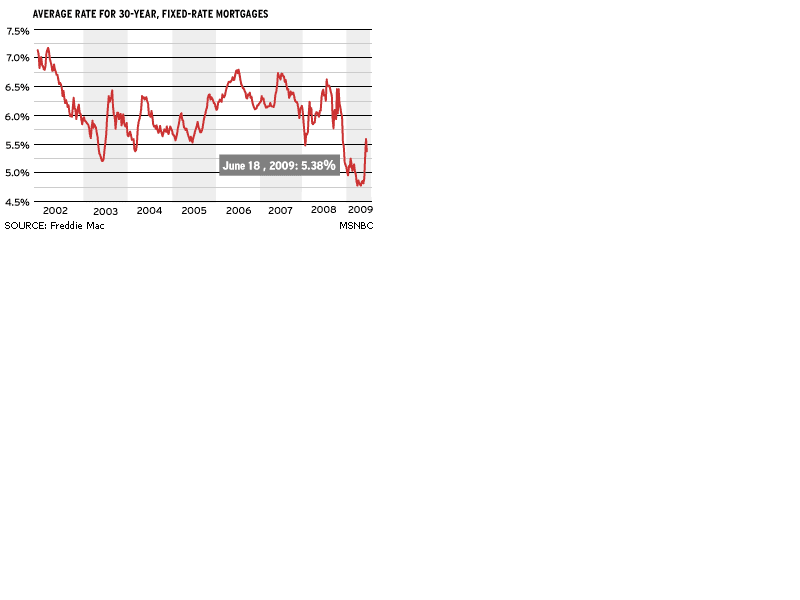
Mortgage interest rates do not generally fluctuate wildly, but small changes can make a big difference in the overall cost of a loan. You can get a general feel for what mortgage interest rates are doing by studying a history of the direction of interest rates. These charts can be found on websites like BankRate.com or Bloomberg.com

For the past several years we have experienced declining interest rates. However, it appears that after seeing historically low rates (matching those of the early 50’s) an upward trend in rates is taking place. Over the course of the last four weeks rate rates have trended up with a slight down tick the week just ended (6/21). Currently rates for a 30 year fixed mortgage are running from 5.25 to 5.75%.

All of the mortgage consultants that I have discussed rates with have indicated that they anticipate the prevailing rate by end of year is expected to be over 6%, which is up from a low of 4.5% experienced earlier this year. While, longer range forecast are for rates of as much as 8% by the end of 2010. Now make no mistake even 8% is a good rate when looking at rates of the 70’s … but the mortgage rate sale is coming to a close!

Average Interest Rates for 30 Year Fixed Rate Mortgages

As mortgage interest rates rise, you’ll be able to afford less house for your money, so if rates are expected to rise and you’re in the market for a house, you may want to consider stepping up your house-hunting efforts.

Mortgage interest rates are definitely increasing for a certain group of people: those folks who have damaged credit and who have foreclosures or other loan defaults on their credit reports. The sub-prime mortgage crisis has made most financial institutions wary of lending money to people with low credit scores (currently below 650) because these folks are considered to be high credit risks.

Traditionally, people who are considered to be high credit risks receive higher interest rates for any credit product. If your credit rating is steadily decreasing, you can be assured that the interest rates of any mortgage loan available to you will also steadily increase as a direct result.

On the other hand, interest rates tend to decline for people with great credit (Credit Scores 720 and higher). For this reason, a person who fastidiously repairs his or her credit and achieves a high credit score will find that the mortgage loan interest rates available get lower and lower. The more attractive an applicant can become to a lender, the more likely the lender will offer low interest rates.

Posted in The Real Story | Tagged , | Leave a comment

Home Values & The Real Estate Market in Jefferson County…

The Real Story …

News and commentary about the real estate market and related topics.

Dave Parrish, ABR, CRSA, CSP, GRI, ePRO, Realtor

Home Values & The Real Estate Market in Jefferson County …


It is certainly true that Birmingham is a more stable Real Estate market than those featured in the news … in terms of foreclosures Alabama rates #34 in terms of the number of foreclosures (meaning that only 15 states have lower foreclosure rates). Even so, Birmingham has not been untouched by the declining economy.


All real estate is local and local in this case is certainly more granular than just Jefferson County or the City of Birmingham. The local real estate market is defined at levels at least as low as neighborhoods within areas of the city/county … Sometimes, markets can be defined as fine as the street or range of addresses on a given street.


For that reason averages can often be misleading … if we say that an area has experienced a 2.4% increase in property values in a given period of time that doesn’t mean that every neighborhood or sub market in that area has that experience. Also by definition an average is simply a normalization of a range of values. Roughly half of the properties in the area experience a lower rate of appreciation while the other half experience a greater appreciation. But Board of Equalization must use a averaging mechanism to reach its assessment of value. Real appraisals of properties would be cost prohibitive (necessitating even higher tax/milage rates). When was the last time your allowed entry to your home by a County Tax Assessor?


To say that foreclosures are not used in determining value is at best misleading. There are sub markets and even whole sections where the number of foreclosures is so high that they must be considered to have a comparable property on which to base an assessment.


Short sales (i.e. sales where the bank / mortgage holder allows the homeowner to sell a property for less than what is owed on the property to avoid foreclosure) do not show up as foreclosures but do affect market value.


That is not to mention, other distressed sales where sellers are forced to sell to avoid foreclosure or are providing significant buyer incentives in terms of things like paying all closing costs and pre-paid items for the buyer in amounts up to 6% of the sales price (an already reduced market value) to consummate the transaction. In these cases which are increasingly common, the home actually sales for up to 6% less than the county is able to see in their records.


Finally, you must remember that these assessments (the County’s Assessed Market Value) has a built in time lag which makes it less accurate than that being experience in the present. We never hear complaints about this time lag in a truly appreciating market … but they become painfully apparent in a declining market.


The fourth quarter of 2008 (which was outside of the County’s latest assessment window) was a brutal market in which we saw some rather drastic price reductions were seen in all areas.


So where is the market … Birmingham is a stable real estate market … but it is a market which is in a down cycle … expect some additional erosion in real market value for a while longer. While Birmingham is rated as the #4 market in the recovery (CNN May 2008), we are still definitely in a Buyer’s Market (defined as any time when there is more that 6 month inventory of homes on the market).


13129            Homes on the market (06/15/2009) ..

996            Absorption rate / Homes sold per month 996

(average per month last six months 5975/6)

13.2            Months inventory


When supply is high prices are down …


Due to the emotional value we place on them, we have historically refused to see our homes as commodities …but in truth they are a commodity whose value fluctuates with the market for them. When supply is low, prices rise … when supply is high, prices fall …


So Buyers have a great selection from which to choose at market adjusted prices.


Low interest rates! But they are now beginning an upward surge … Do not hold out for a return to 4.5% … It’s not going to happen! Expect at least 8% by the end of 2010 … but that isstilla historically great rate .. a long way away from the 20% rates if the 70’s.


First Time Buyer Incentives (anyone who has not owned a home in the last 36 months):10% Tax Credit up to $8,000 (Expires 12/1/2009 … sale must close before this date).


Sellers beware … The buyers are watching the national news and expecting great deals. Most do not understand that the Birmingham market is different from the national market … and certainly different from the markets in Nevada, Florida, California, Arizona, Michigan and Ohio. Another round of foreclosures is on the horizon for this summer! Expectations for Buyers in this market are high as towhat they will get for every dollar spent. Examine your reasons for selling … Are you truly motivated to sell in this market? If you are not a motivated seller and put your home on the market, you create frustration for all and contribute to the market pressuresthat drive prices down. So ask yourself is now really the time for me to sell?


However, it is still a great time to sell if you are moving up in price range … I would recommend a jump of at least 50% in market values …but sell before you buy.


Note homes priced above $250,000 are moving very slowly. Homes above $417,000 (Jumbo loans) are even slower moving due to higher interest rates on jumbo loans often as much as twice the FHA Rates (today’s rates on Jumbos running in the 10-12% range.


Nearby local markets that have suffered substantial drops in market value include: Center Point, Grayson Valley & Pinson.

Posted in The Real Story | Tagged , , , | Leave a comment

Original Blog Kick Off …

Welcome to MyBlog … I hope you’ll become a regular visitor and even better a contributer to this effort.

My overriding goal is to provide a forum for discussing real estate related topics of interest to my friends, clients and the community at large …

Posted in The Real Story | Leave a comment